


5 Ways Thoughtful Cabin Design Inspires Customer Loyalty and Generates Profits
by Admin.
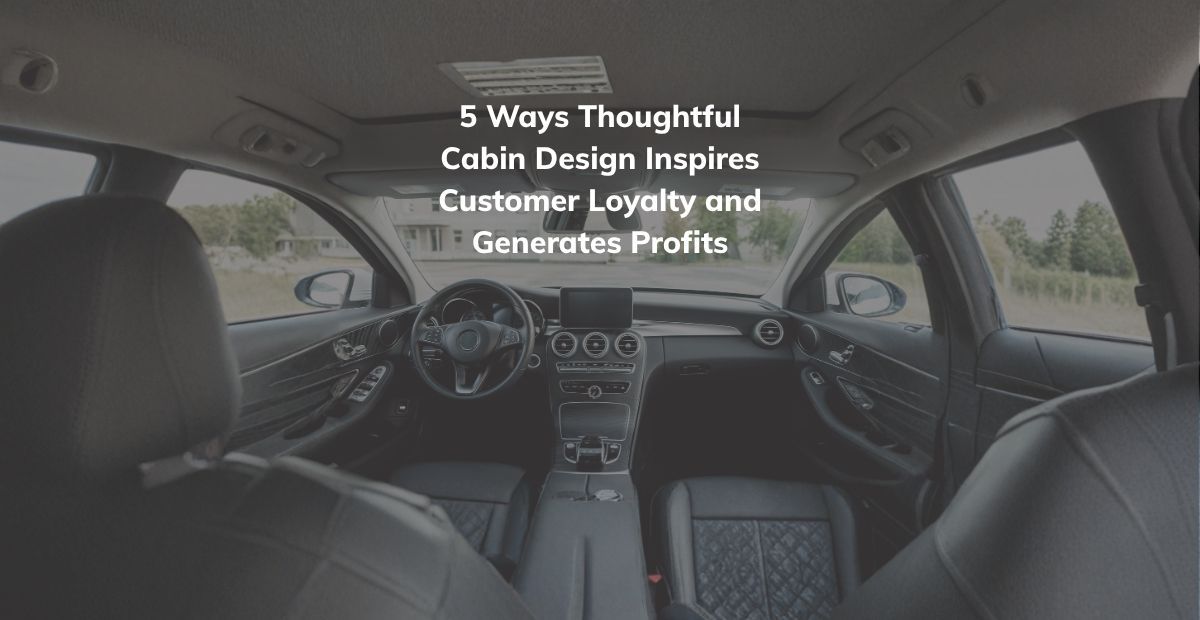
Picture this: You slide into the driver's seat after a gruelling day. The door closes with a reassuring thud, not a tinny clang. Your body sinks into a seat that seems moulded precisely for your frame. The cabin is whisper-quiet, cocooning you from the chaos outside. Before you even turn the key, something shifts. You exhale. This isn't just a car; rather, it's your sanctuary.
This emotional connection doesn't happen by accident. It's engineered, piece by piece, into every surface you touch, every sound you hear, and every breath you take inside that cabin. And here's what OEMs are discovering: that split-second feeling of "this is my space" translates directly into customer loyalty and, ultimately, profitability.
The US automotive loyalty rate currently stands at 51.1%, a figure under pressure as consumers have more choices than ever before. In this fiercely competitive landscape, the difference between a repeat customer and someone who switches brands often comes down to how the vehicle makes them feel. And that feeling? It starts the moment they enter the cabin.
At Hinduja Tech, we've witnessed firsthand how thoughtful body engineering and cabin design transform vehicles from mere transportation into trusted companions. Drawing on our extensive experience providing Body Engineering services to leading passenger vehicle OEMs, we've identified five critical ways cabin design drives both customer loyalty and bottom-line results.
1. Ergonomic Comfort: The Silent Promise of Every Journey
Your spine wasn't designed for prolonged sitting. Yet the average person now changes cars only every 12.8 years, meaning they'll spend thousands of hours in that seat. For daily commuters logging 45 minutes each way, that's over 500 hours annually, which roughly translates to nearly 21 full days just sitting in their car.
This is where ergonomic engineering transcends buzzwords and becomes deeply personal. As the functional characteristics of vehicles reach satisfactory levels, customers' concerns with ergonomic and aesthetic aspects of interior design have increased significantly. People aren't just buying acceleration anymore; they're buying freedom from the neck pain that plagued them during the usage of their last car.
Modern ergonomic design uses anthropometric data to accommodate the 5th percentile female to the 95th percentile male, covering approximately 90% of the adult population. But the real innovation lies in the details: seats engineered to maintain the natural S-curve of the spine, reducing lower back pressure, adjustable lumbar support that adapts to individual body shapes, and steering wheels positioned to minimise shoulder strain while maintaining precise control. Ergonomics is fundamental to safety, mission readiness, and inclusivity, but it's also fundamental to loyalty. When a customer realises their back doesn't ache after a long drive, that's when a car becomes their car. And 8 out of 10 customers who have a positive sales experience are more likely to return to the dealer for service, and 9 out of 10 are more likely to purchase another vehicle.
The business case is compelling: reducing driver fatigue through superior ergonomics not only improves customer satisfaction scores but also directly influences repurchase intent and reduces warranty claims related to comfort features.
2. Breathing Life Into Sustainability: Air Quality That Customers Can Feel
Here's a question most automakers never asked until recently: What if your cabin could heal you instead of harm you? We spend significant time inside our vehicles, yet few of us consider what we're breathing. The automotive cabin air quality sensors market is projected to grow from USD 1.19 billion in 2025 to USD 3.94 billion by 2035, with a CAGR of 12.7%. This explosive growth reflects a fundamental shift in consumer priorities; air quality has moved from invisible to invaluable.
Modern cabin air quality systems do more than filter pollen. Advanced HEPA filtration captures PM2.5 particulates. Activated carbon filters neutralise volatile organic compounds (VOCs) that off-gas from plastics and fabrics. Real-time air quality sensors monitor cabin conditions and automatically adjust ventilation.
But here's where engineering meets emotion: Automakers that position air quality as a core feature stand to gain from improved brand perception and customer loyalty. When parents choose a vehicle knowing their children will breathe cleaner air during the school commute, when allergy sufferers find relief inside their cabin, that's loyalty built on tangible wellbeing.
The sustainability angle amplifies this effect. Collaborations focused on sustainable materials in cabin design positively impact air quality. Natural fibres, recycled materials, and low-VOC adhesives are environmentally responsible. For OEMs, the investment pays dividends. The automotive in-cabin air quality improvement solutions market is worth $4.37 billion by 2030, growing at a 12.51% CAGR. Customers notice the difference, and they remember it when the lease ends.
3. Acoustic Sanctuary: The Power of Silence and Sound
Close your eyes. Imagine driving a car where the tyre hum has been replaced by near-silence, where conversations happen at normal volume, even in a traffic jam, and where the thud of the door closing communicates precision, quality, and craftsmanship.
This isn't luxury; it's science. And it's increasingly what separates premium brands from mass market. Premium brands focus on noise, vibration, and harshness (NVH) automotive performance to enhance customer satisfaction. The reason is simple: acoustic characteristics of vehicles play a crucial role in customer satisfaction. NVH engineering has evolved from fixing squeaks and rattles to crafting favourable sonic experiences.
Consider the technical complexity: engineers must address road noise transmitted through the chassis, wind noise at high speeds, powertrain vibrations, and even the acoustic characteristics of interacting materials. Squeak and rattle testing is one important factor for customer satisfaction, because nothing undermines perceived quality faster than an annoying rattle from the dashboard.
But NVH goes beyond elimination; it's about composition. Engineers consider metrics like pitch, tone, and sound frequency when conducting sound quality analysis, including loudness, sharpness, roughness, and fluctuation strength. Electric vehicles present unique challenges here; without engine noise masking other sounds, every squeak becomes audible.
The impact of acoustic comfort on humans is profound. It reduces driver fatigue, improves concentration, and creates a psychological space that makes the cabin feel like a retreat. When the outside world's chaos can't penetrate your vehicle, loyalty follows naturally.
From a business perspective, the global automotive acoustic engineering service market was valued at USD 6.9 billion in 2024 and is projected to grow at a CAGR of 8.9% through 2034. This investment reflects a critical insight: customers will pay premium prices for premium quiet.
4. Intuitive Technology Integration: Where Interface Influences Customer Loyalty
We've all experienced the frustration: you're driving, need to adjust the climate control, and suddenly you're navigating three menu layers on a touchscreen while trying to keep your eyes on the road. This isn't innovation; it's a design failure. Placement of displays and switches influences glance behaviour and manual reach. Material selection affects thermal comfort and tactile satisfaction. The best cabin designs make technology invisible. They make it so intuitive that you interact with it unconsciously.
This requires understanding driver behaviours at a granular level. Eye-tracking studies reveal optimal placement for instrument clusters and infotainment screens to minimise the time required for drivers' eyes to transition between the road and displays. Physical controls for critical functions such as volume, climate, and hazard lights always tend to remain superior to touchscreens because they provide tactile feedback without requiring visual confirmation.
The stakes extend beyond convenience. Cognitive load matters. When drivers struggle with overly complex interfaces, their attention shifts away from the primary task: safe driving. When technology feels natural, it anticipates needs rather than demanding attention, thereby building customer trust.
Personalised onboarding is necessary to enhance advocacy and the relationship with the brand as advanced features become more prevalent. Teaching customers how their vehicle's technology works and making it adaptable to their preferences creates ownership and investment.
The profitability equation is straightforward: customers who understand and appreciate their vehicle's technology features are more satisfied, more likely to recommend the brand, and more inclined to upgrade to newer models with enhanced capabilities.
5. Personalisation and Flexibility: Making Every Cabin Unique
Here's a fundamental truth about human psychology: we bond with things we can make our own. Personalisation is the real secret to achieving maximum brand loyalty because buying a car is unlike other consumer goods; the purchase cycle is very long. This extended ownership cycle means OEMs must create ongoing opportunities for engagement. Cabin personalisation delivers precisely that.
Modern vehicles offer unprecedented customisation: memory seats that recall your exact position, ambient lighting programmable to your mood, and climate zones that let driver and passenger create their own microenvironments. These aren't gimmicks; rather, they are expressions of individual identity.
The technical implementation requires sophisticated sensors, algorithms, and integration across multiple systems. But the emotional payoff is profound. When your car greets you with your preferred settings, such as seat position, mirror angles, temperature, and even steering feel, it communicates recognition. You're not just a driver; you're the driver of this particular vehicle.
Flexibility extends to functional adaptation. Configurable storage, moveable cargo management systems, seats that fold in multiple configurations; all these features acknowledge that life isn't static. The cabin that accommodates both your daily commute and weekend adventures becomes indispensable.
Households that lease vehicles have a loyalty rate of 60.4%, whereas those that purchase with a loan show a loyalty rate of 48.0%. One explanation: lease cycles create regular opportunities for customers to experience newer personalisation features, building anticipation for upgrades. When customers can imagine their next vehicle offering even more tailored experiences, loyalty becomes aspiration.
The Hinduja Tech Perspective: Engineering Loyalty, Designing Profit
The automotive industry stands at an inflexion point. Brand loyalty continues to decline globally, yet the opportunity to differentiate through exceptional cabin design has never been greater.
At Hinduja Tech, our body engineering expertise positions us uniquely to help OEMs capitalise on this opportunity. We understand that every cubic inch of cabin space represents a chance to build loyalty or lose it. Every material choice, every acoustic treatment, every ergonomic decision cascades into customer perception and, ultimately, financial performance.
The data reveals the path forward: invest in ergonomics that respect human physiology, prioritise air quality that promotes wellbeing, engineer acoustic environments that provide sanctuary, integrate technology that feels intuitive, and enable personalisation that acknowledges individuality.
These aren't separate initiatives. They are interconnected elements of a comprehensive cabin strategy. When executed with precision and insight, they transform the mundane act of getting from point A to point B into an experience customers crave and competitors struggle to match.
The future of sustainable mobility isn't just about electric powertrains and reduced emissions. It's about creating cabin environments so thoughtfully designed and deeply aligned with human needs and desires that customers can't imagine choosing anything else. That's the loyalty that drives profits. That's the engineering that changes industries.

About Author
Admin
Subscribe to Email Updates
FOLLOW US ON
LinkedIn @Hinduja Tech Limited
Categories
- Body Engineering (7)
- Digital Services (8)
- Electric & Future Mobility (10)
- Product Engineering Services (3)
- RelAI (1)
- SAP (3)
- Thermal Management (1)
- Commercial Vehicle (2)
- Industrial simulation (3)
- Supply chain engineering (1)
- Ergonomics (1)
- Human simulation (1)
- Automotive (4)
- Manufacturing (3)
- General (1)
- Sustainable (8)
- Engineering (13)
- Innovation (2)
- Electronics (1)
- CAE (6)
- Digital Technology (1)
- Supply Chain Management (4)
- vehicle electronics & software (6)
- vehicle engineering (2)
- Mobility (5)