


How Are Automotive Interior Trims Engineered for Styling, Compliance, and Manufacturing? | A Case Study
by Kishor Thakare.
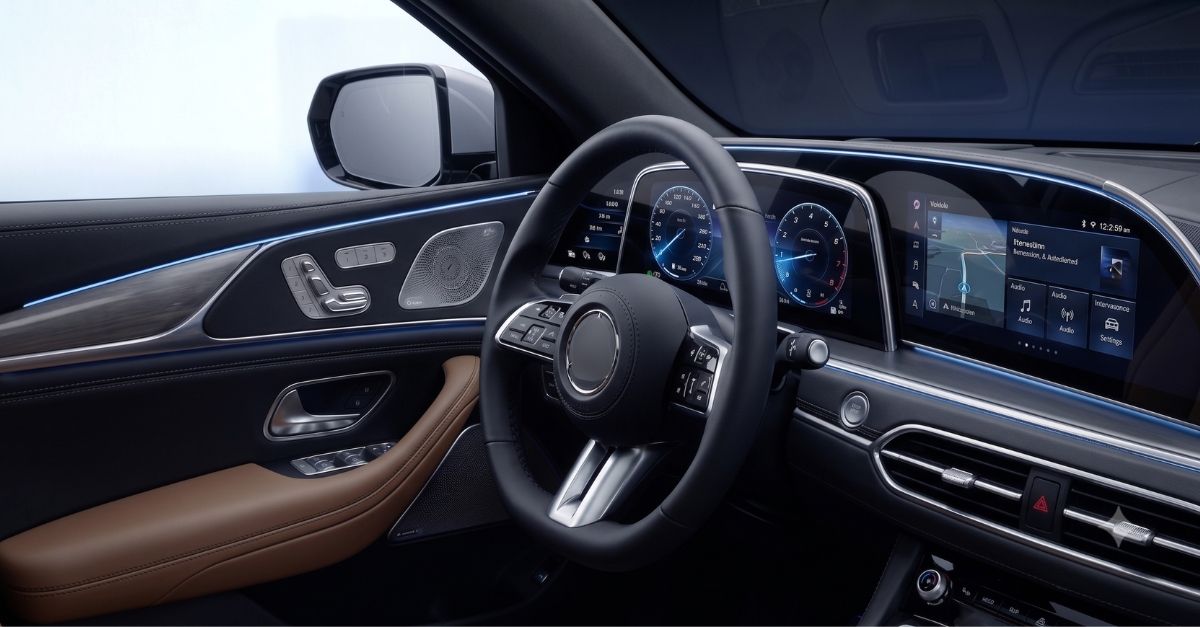
A customer never touches the powertrain. They touch the dashboard, the door panel, and the padded armrest. This is where quality stops being just a list of specs and becomes something a driver can actually feel. For OEMs trying to stand out in a crowded EV market where engineering can look very similar, this tangible experience is the new battleground. This case study breaks down how Hinduja Tech engineers instrument panels and door trim from concept to Start of Production (SOP), and what it actually takes to get aesthetics, ergonomics, and compliance to align.
Why Interior Trims Engineering Demands a New Approach
Cabin design used to be a styling exercise layered on top of a fixed package. That model is breaking down. Interior trims now sit at the intersection of styling intent, ergonomic regulation, structural performance, and lightweighting targets, often on compressed programme timelines.
When you add premium expectations, fabric and leather-wrapped instrument panels, integrated ambient lighting, and lightweight construction, the interior trim system stops being a cosmetic afterthought. It becomes an engineering discipline of its own, one where a single overlooked clearance check or fixation tolerance can derail a build.
Project Scope: What We Set Out to Build
The brief was end-to-end: design engineering of the instrument panel and door trim for a passenger vehicle, carried from concept through final release. That scope included full technical documentation, regulatory assessment, Design Failure Mode and Effects Analysis (DFMEA), Design for Manufacturing (DFM), Design for Serviceability (DFS), and Design for Assembly (DFA), built in parallel with the design.
The system had to satisfy styling intent across multiple trim variants while holding to accessibility, reachability, and clearance requirements that vary by market and regulation. Any one of these constraints can reshape a surface; so, all of them must be satisfied together.
Key Engineering Challenges
Turning that brief into a production-ready interior trim system revealed five challenges that shaped every downstream decision.
1. Styling Intent vs. Regulatory and Ergonomic Constraints: Initial Collision Avoidance System (CAS) surfaces look great in isolation. Reachability, occupant clearance, and crash-regulation checks routinely require surface changes, and the trim engineering team must incorporate them without compromising the original design language.
2. Part-Split Strategy Across Variants: Passenger vehicles rarely come with one trim configuration. Splitting parts to serve multiple variants while keeping tooling costs and assembly complexity under control required an early, deliberate split strategy rather than a reactive one.
3. Fixation, Datum, and Gap-and-Flush Precision: Interior panels are judged on touch and sightlines. Defining the part fixation, reference point system, and datum strategy early was essential to controlling gap and flush across every build, especially where fabric or leather wrapping adds dimensional variability.
4. Structural Validation Without Added Mass: Modal response, stiffness, and vibration path analysis all had to confirm the trim would perform under real driving loads, without quietly inflating part mass in ways that undercut lightweighting goals.
5. Manufacturing Feasibility at Detail Design: Digital validation findings and supplier manufacturing constraints both had to be folded back into the detail design, late enough to be accurate but early enough to avoid costly rework before SOP.
Our Solution: A Structured, Concept-to-SOP Workflow
Hinduja Tech's body engineering team structured the programme as a continuous thread from benchmarking through post-launch support, not a series of disconnected handoffs.
Benchmarking and Feasibility
Desktop benchmarking against current trends and technologies fed directly into a feasibility study on the initial CAS, covering styling feasibility, regulatory checks, and accessibility, reachability, and clearance verification.
Concept Development and Build Strategy
Concept designs for fabric-and leather-wrapped instrument panels were developed to meet functional and aesthetic requirements simultaneously, supported by a defined part-split strategy and a master section book covering assembly sequence, fixation strategy, and environmental packaging.
Digital Validation and Cross-Functional Coordination
Modal, stiffness, and vibration path analysis were coordinated alongside supplier interactions, so manufacturing feasibility and digital validation feedback shaped the detail design before tooling commitments were locked in.
Build Tracking and Post-SOP Support
Technical documentation, including regulation assessment, DFMEA, DFM, DFS, and DFA, was tracked through vehicle build and physical validation with issue resolution carried through and post-SOP support provided after launch.
What This Means for OEMs and Tier-1 Suppliers
With a track record of 50+ completed interior trim programmes for leading Indian, European, and UK OEMs, Hinduja Tech has proven that the pattern holds: trim systems that integrate styling, ergonomics, structure, and manufacturability right from the concept stage reach SOP with fewer late-stage surprises. For our clients, technologies like integrated ambient lighting, fabric-wrapped panels, and lightweight construction become genuine market differentiators rather than risk items simply because we establish the engineering discipline early, rather than retrofitting it.
For OEMs and Tier-1 suppliers building next-generation cabins, particularly in EV programmes where interior experience is increasingly the brand differentiator, the lesson is consistent: trim engineering decisions made at the concept stage determine how smoothly a programme reaches validated, producible interior trims at SOP.
Why Choose Hinduja Tech for Interior Trims Engineering
Programmes under tight homologation timelines need a partner who owns the full thread from CAS feasibility to post-SOP support, not just a single deliverable in isolation. Hinduja Tech's experts bring production-proven experience in styling feasibility, regulatory and ergonomic compliance, structural validation, and manufacturing coordination, enabling OEMs and Tier-1 suppliers to move from concept to a validated, manufacturable interior trim with confidence.
If you're scoping an interior trim programme or evaluating engineering partners for your next vehicle platform, reach out to us at info@hindujatech.com.

About Author
Kishor Thakare
Subscribe to Email Updates
FOLLOW US ON
LinkedIn @Hinduja Tech Limited
Categories
- Body Engineering (7)
- Digital Services (8)
- Electric & Future Mobility (10)
- Product Engineering Services (3)
- RelAI (1)
- SAP (3)
- Thermal Management (2)
- Commercial Vehicle (2)
- Industrial simulation (3)
- Supply chain engineering (1)
- Ergonomics (1)
- Human simulation (1)
- Automotive (4)
- Manufacturing (3)
- General (1)
- Sustainable (8)
- Engineering (13)
- Innovation (2)
- Electronics (1)
- CAE (7)
- Digital Technology (1)
- Supply Chain Management (4)
- vehicle electronics & software (6)
- vehicle engineering (2)
- Mobility (5)